

The latest increase in UK Air Passenger Duty is adding further pressure to already stretched travel budgets. We explore the impact and how smarter planning can help offset rising expenses.
Business travellers have experienced a slight rise in air fares for flights leaving UK airports since 1 April, after increases to the country’s Air Passenger Duty (APD) came into effect.
The rate hike, first announced in 2024, added £2 to an economy class short-haul flight, while long-haul flights incurred a 13 per cent rate rise and taxes on private jets jumped by almost 50 per cent.
The UK’s Business Travel Association (BTA) criticised the tax hike, labelling APD “a major barrier to global connectivity”.
"These increases are a hidden squeeze on travellers that often goes undiscussed – especially when APD doesn’t even offset the ever-rising and highly controversial airport drop-off fees,” said BTA CEO Clive Wratten.
“For business travellers, including those in vital frontline roles, APD is an upfront hurdle before a single visa is processed or a hotel is booked. Call it what it is – a tax on the connectivity that keeps our economy moving," he added.
The new APD rates are shown below.
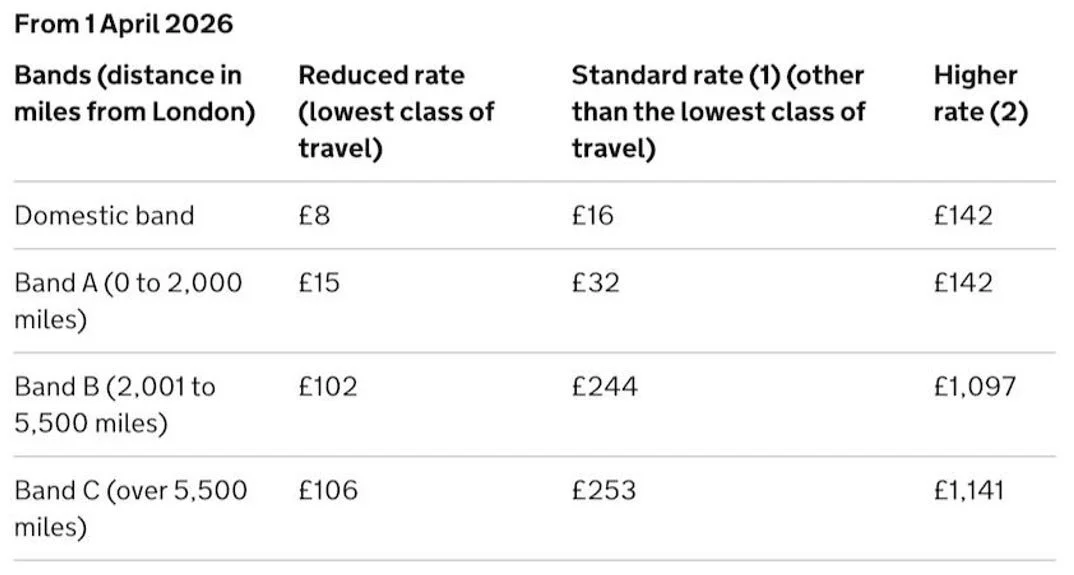
Air Passenger Duty rates. Source: www.gov.uk
Previously, the reduced rate for economy travel or seats with a pitch of less than 40 inches was charged at £7 on domestic flights, £13 on flights up 2,000 miles, £90 on flights of 2,001 to 5,500 miles, and £94 on flights of more than 5,500 miles.
For premium travel, or seats with more than a 40-inch pitch, the standard rates were £14, £28, £216 and £224 respectively.
“The increase in Air Passenger Duty from 1st April adds further cost pressure to business travel at a time when organisations are already balancing budgets, policy compliance, and traveller wellbeing,” said Richard Ware, Head of Corporate Sales at Meon.
“From a corporate travel perspective, APD is a fixed, upfront cost that offers limited flexibility or value control. It applies before any strategic decisions around airline, routing, or programme efficiencies can be realised — effectively increasing the baseline cost of travel irrespective of supplier choice.
For businesses reliant on regular travel — particularly those with international operations — this places additional strain on travel budgets and may influence behavioural shifts, including greater scrutiny on trip necessity, class of travel and advance booking strategies.”
At Meon, our focus remains on mitigating these external cost pressures through best fare sourcing, policy optimisation and data-driven programme management. While APD is outside of supplier negotiation, its impact can be offset through smarter travel planning, increased visibility of spend and ensuring every journey delivers clear business value.
